Deciding on Aesthetic Treatment in Chandigarh: Which Factors Should Guide Your Choice?
Two people may request an identical cosmetic treatment while having quite different treatment needs. One person concerned about abdominal fullness could have a concentrated area of fat, while another may have loose skin or changes in the abdominal muscles. Similarly, visible hair thinning does not automatically mean a transplant is the appropriate next step. The most helpful first step is to understand the underlying concern before selecting a procedure.
For people evaluating a cosmetic surgeon in Chandigarh, this distinction matters more than an impressive treatment name. A careful consultation links the intended outcome with anatomical factors, general health, expected recovery and achievable results. Whether someone is considering body shaping, reducing unwanted hair or improving scalp coverage, the decision should become clearer through examination and explanation.
Explain the Desired Change Before Choosing a Procedure
Many individuals come to their first appointment with a procedure already in mind. They might have viewed an image, viewed a video showing a procedure or learned about someone else's treatment experience. These references can help explain preferences, yet they do not confirm that an identical treatment is appropriate for someone else.
Begin by explaining the concern in ordinary language. You might find that your clothes fit well apart from one particular region. Alternatively, frequent shaving might irritate the skin. You may have noticed that a widening hair parting is increasingly visible in photographs. Every such explanation provides the clinician with a particular concern to examine.
Explain what improvement would feel worthwhile along with any consequences you would consider unreasonable. An individual who cannot manage the demands of postoperative recovery might choose differently from a person willing to take leave from work. A person who wears their hair very short might be especially concerned about whether scars in the donor area will be visible.
A useful consultation turns a broad wish into an achievable objective. The discussion should additionally reveal when the proposed procedure would not adequately resolve the primary concern.
Turn Search Labels into Questions You Can Assess
Looking for the best plastic surgeon in Chandigarh may offer a preliminary group of options, yet that description is not evidence of suitability for a particular patient. The same applies to descriptions such as leading plastic surgeon Chandigarh. These phrases need to be translated into questions concerning professional qualifications, appropriate experience, clinical judgement and accountability.
Check the surgeon's recognised specialist training and present registration status. Discuss experience in performing the specific treatment you are considering, particularly how patients are assessed for suitability and how complications are managed. A surgeon's experience with one type of surgery cannot, by itself, establish competence across every aesthetic treatment.
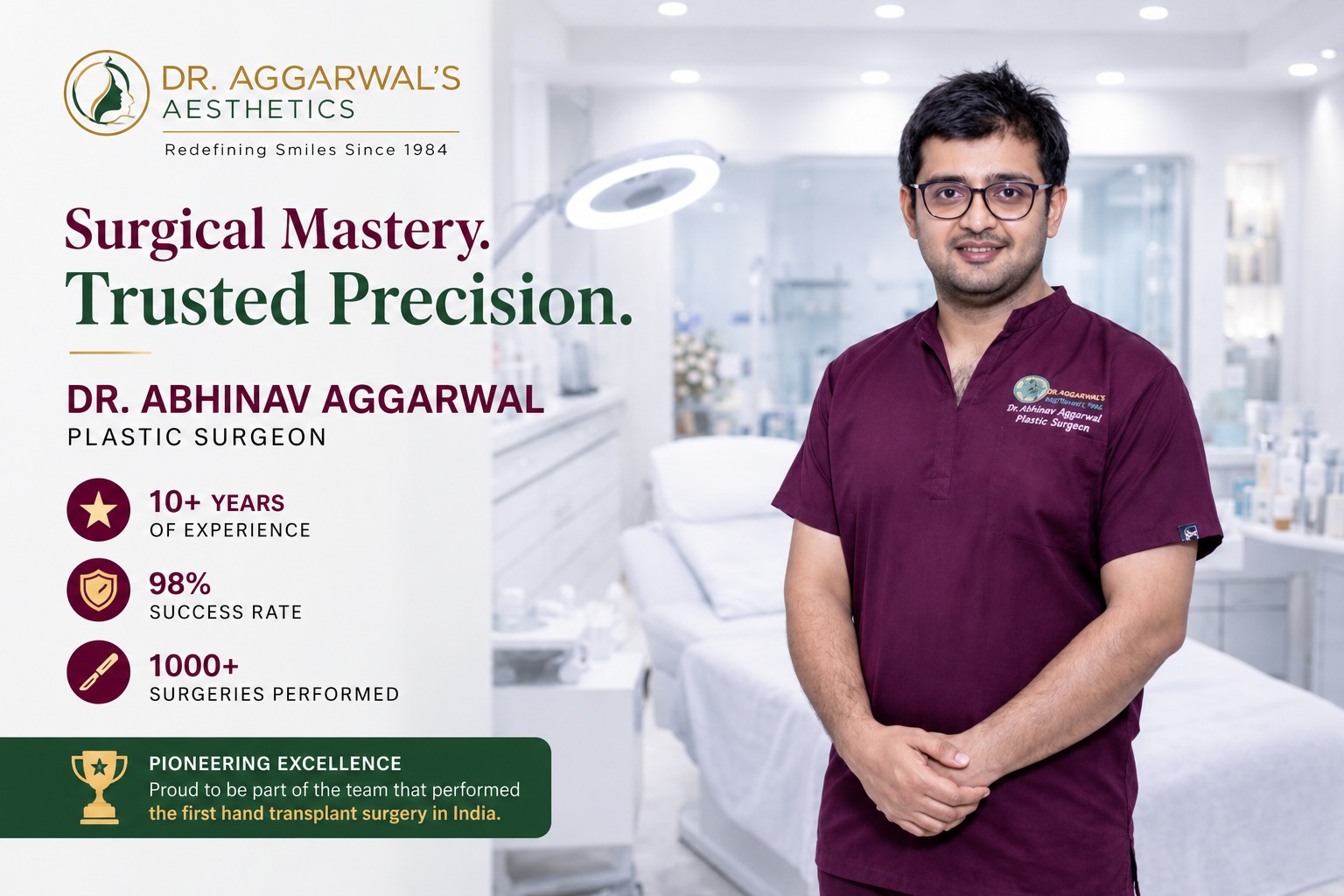
Individuals evaluating Dr. Aggarwals Aesthetics or Dr. Abhinav Aggarwal can use the same assessment approach. Knowing which professional will carry out the treatment, who provides anaesthesia when required, and who supervises postoperative recovery provides more useful information for making comparisons than marketing claims by themselves.
Notice how the clinician discusses uncertainty. A considered response might explain practical limitations, different options or advice to delay treatment. The willingness to decline an unsuitable procedure forms a valuable element of responsible clinical judgement.
Effective Body Contouring Assessment Goes Beyond Fat Deposits
Individuals exploring liposuction surgery Chandigarh frequently seek improved body proportions rather than substantial weight reduction. Liposuction is used to remove fat from particular areas but it is neither an obesity treatment nor a substitute for managing body weight. Whether it is appropriate depends in part on the condition of nearby tissues.
The elasticity of the skin is important because it needs to adjust to the new body shape. Removing fat does not reliably correct substantial skin looseness. Likewise, fullness caused by deeper structures or abdominal muscle changes could call for consideration of other approaches.
Consider someone whose weight has remained stable although they remain concerned about persistent waist fullness. The evaluation may be different for somebody who has substantial loose skin following major weight reduction. While both people might describe their abdomen as excessively bulky, the underlying problem is different.
An appropriate consultation should discuss the expected change in body shape, pre-existing differences in shape, possible scar locations and the chance of persistent irregularities. Ask what the procedure is unlikely to change. Recognising these limitations reduces the risk of viewing an otherwise suitable procedure as a comprehensive answer to every issue affecting the region.
Skin and Hair Evaluation Matters Before Laser Hair Removal
Choosing a laser hair removal clinic Chandigarh should involve more than comparing packages or counting sessions. Treatment outcomes can vary according to individual factors such as hair type, pigmentation of the skin, treatment location and the device and treatment parameters involved.
The laser acts on pigment found in association with hair follicles. Hair growth occurs in cycles, which is why treatment typically involves a series of appointments rather than a single session. Expected hair reduction and the potential need for later maintenance should be discussed individually.
A comprehensive evaluation should consider any recent tanning, a history of skin sensitivity, relevant medication use and conditions that influence hair development. People with darker skin tones need careful consideration of the device and treatment settings as the surrounding skin must be protected against avoidable injury.
Check which professional examines the skin, who conducts the sessions and what level of clinical supervision is present. Protective eyewear and clear preparation instructions should form part of the process. Some patients experience temporary redness or swelling, while skin burns or alterations in pigmentation are recognised potential risks. A lower treatment cost is hard to compare fairly without knowing what assessment, clinical oversight and follow-up support the price covers.
Planning Hair Restoration Means Considering Future Needs
The best hair transplant clinic in Chandigarh for a particular person requires more than comparing the quantity of grafts being offered. Hair transplantation moves hair from available donor areas. It does not generate unlimited additional hair, so potential future hair thinning must still be considered.
Prior to deciding where grafts should be positioned, the specialist needs to consider the reason for hair loss, donor availability, scalp condition and the stability of the hair-loss pattern. For some patterns of hair thinning, medical evaluation or treatment should take place before considering an operation.
Hairline design also deserves careful discussion. A very low hairline may seem attractive initially yet it may consume donor hair that could be valuable in future. A thoughtful design should take account of facial balance and the person's age as well as the risk of further thinning in neighbouring untreated hair.
Discuss how the treatment plan aims to achieve both coverage and density. Although connected, they represent distinct objectives: distributing donor grafts over a larger region can reduce the density possible in individual sections. Both commonly used extraction approaches can leave scars, but the appearance and distribution of those scars can vary. The specialist should discuss how these approaches differ alongside the risks of poor graft growth, infection and an unnatural appearance.
Consider the Treatment Facility as Well as the Procedure
When assessing a cosmetic surgery clinic Chandigarh, the facilities should be considered with reference to the demands of the intended treatment. A consultation room, a laser treatment area and an operating facility are subject to different practical needs. An impressive interior alone provides no assurance that the environment meets the needs of the intended procedure.
For surgery, ask where plastic surgery clinic chandigarh the operation takes place and how anaesthesia and recovery monitoring are organised. Check which essential facilities and appropriately trained staff are present should an unforeseen complication arise. If appropriate, ask how a patient would be transferred to a facility offering more advanced care.
Even with less invasive treatments, proper oversight and arrangements for additional medical care remain important. Individuals receiving treatment need to understand who would evaluate an unexpected response and what arrangements exist for an urgent medical assessment.
When comparing a plastic surgery clinic Chandigarh, check that the level of care offered matches the demands of the intended procedure. The central consideration is whether the facilities, personnel and postoperative provisions match the needs of the individual patient.
Understand Recovery as a Series of Stages
Providing only one expected recovery period can conceal significant variations. Being able to answer messages from home does not necessarily mean someone can travel to work without difficulty, lifting equipment, attending a public event or returning to strenuous exercise.
Describe your normal routine during the consultation. Office-based duties, working outdoors, physically demanding jobs and responsibilities for others involve different physical requirements. Planned journeys can influence when treatment should be scheduled and whether follow-up appointments are practical.
Request individual estimates for pain or discomfort, noticeable swelling, wound management, limitations on activity and when the outcome can reasonably be evaluated. Swelling following an operation may initially conceal changes in body shape, whereas evaluating hair restoration takes patience as new growth becomes apparent gradually.
Arrange practical support according to the proposed procedure. Support could include organising a journey home after receiving sedation, assistance with everyday activities or leave from physically demanding employment. Follow the treating clinician's instructions rather than another patient's recovery schedule. Personal recovery patterns, the scope of the procedure and medical circumstances can all influence the course.
A Useful Treatment Quote Covers the Complete Care Plan
An initial price displayed in an advertisement is rarely enough to assess competing treatment proposals properly. The relevant figure is the expected cost of the proposed plan, along with an understandable breakdown of the services covered.
When considering surgery, check if the initial assessment, necessary tests, anaesthetic services, use of the surgical facility, recommended garments and planned follow-up appointments are included. Enquire about how extra treatment or follow-up would be managed if healing is slower than expected or a complication requires treatment.
For laser treatment, understand which areas are included, the proposed session schedule and the arrangements if the skin requires longer recovery between treatments. For a hair transplant, understand the connection between the estimated graft count, the intended hairline design and the amount of usable donor hair.
The objective is to remove uncertainty about the treatment arrangements. Having the information in writing makes it easier to compare equivalent services while identifying situations in which seemingly different charges correspond to quite different levels or arrangements of treatment.
Understanding the Limitations of Treatment Photographs
Photographs taken before and after treatment may demonstrate examples of a surgeon's results, although they cannot guarantee what another patient will achieve. The lighting conditions, patient's positioning, distance from the camera and stage of recovery may influence the appearance of the result.
Look for photographic examples that relate closely to your original condition. Photographs of a person with relatively tight skin might provide limited guidance for an individual with considerable skin laxity. In the same way, the appearance of transplanted hair coverage varies according to the thickness of individual hairs, differences in colour and the hairstyle used.
Talk through the similarities and differences between the examples and your own circumstances. Clarify whether the photographs were taken after recovery had progressed sufficiently or while results were still developing. The discussion should also account for existing asymmetry and the fact that healing differs between individuals.
Other patients' experiences may reveal relevant information concerning the clarity of consultations, appointment arrangements and ongoing assistance. However, such feedback is not a dependable way to determine technical suitability for a different patient. Evaluate photographic examples and reviews together with individual assessment findings, recognised qualifications and a clear medical explanation supporting the proposed approach.
Understand When Delaying a Procedure Is Appropriate
Having a consultation never requires someone to commit to a procedure. Sometimes the most useful outcome is a clearer diagnosis, a recommendation for further assessment or a decision to revisit treatment later.
Postponement can be appropriate if an existing medical concern requires management, weight is changing significantly, hair loss requires investigation or recovery arrangements are impractical. Any recommendation to delay should be explained according to the person's circumstances rather than giving an unclear or unexplained rejection.
The right time for a procedure is another consideration. Choosing treatment because of pressure surrounding an upcoming occasion, a time-limited offer or somebody else's wishes might prevent someone from properly evaluating the possible outcomes. Aesthetic treatment should reflect a person's own considered goals.
Before agreeing, you should be able to explain the proposed procedure, the likely benefit, the main risks and the alternatives in your own words. Should any of these points still be uncertain, taking time for further explanation may be more beneficial than agreeing immediately.
Conclusion
Selecting an aesthetic procedure in Chandigarh can feel more straightforward when the choice is based on a particular need and an understandable clinical plan. Qualifications, examination findings, suitable facilities, realistic outcomes and dependable follow-up should each be carefully considered. Whether the intended treatment involves reshaping body contours, reducing unwanted hair with a laser or restoring scalp hair, the most appropriate decision is one you can clearly understand and explain: how the proposed procedure addresses your particular needs, what its limitations are and how the healing process can be accommodated within your routine.